Rodeo Package

Lineman's Rodeo
Saturday, May 16 | 7:30 a.m. - 3:00 p.m.
11760 Truesdale St. Sun Valley
Register online beginning March 23, 2026
LALinemanRodeo.LADWP.com
For information on volunteering for the event, please contact:
Ken Boothe -
Ken.Boothe@ladwp.com | 213-792-7859
Table of Contents
Schedule
- 7:00 AM - 8:00 AM
-
Registration
Judge's Meeting
- 8:30 AM
-
National Anthem
Start of Competition
- 8:30 AM - 9:00 AM
- Apprentice Quiz
- 9:00 AM - 1:00 PM
-
Face Painting
Rock Wall
Petting Zoo
- 9:00 AM - 1:00 PM
- Food Served
- 2:00 PM
- End of Competition
- 2:30 PM
- Awards Ceremony
Notice
All Rodeo participants will be required to use a Wood Pole Fall Restriction Device (WPFRD) from ground to ground in every event. Examples of WPFRDs are Buckingham BuckSqueeze and/or SuperSqueeze, DBI-Sala Cynch-Lok, Bashlin Patriot, Jelco Pole Choker or another similar device. The WPFRD needs to be in proper adjustment at all times and used according to the manufacturer’s literature. All contestants will have a second safety for transitioning over obstacles. The second safety does not have to be a WPFRD. However, any work being performed on the pole must be done while in the WPFRD.
At each event, the contestants must belt off prior to gaffing with both feet in the pole. When climbing past an obstacle, a second positioning strap must be used. The climber must secure the second positioning strap before un-clipping the WPFRD. Contestants must have at least one foot on the ground prior to un- belting at the base of the pole. Failure to follow these climbing guidelines will result in a two-point deduction for each occurrence. We thank you for your cooperation and participation and look forward to seeing you at the competition.
Judging and Scoring
It is the Rodeo Committee’s objective to ensure that judging remains fair and consistent across the board. However, due to the fact that some aspects of judging are a matter of opinion, situations could arise in which teams may feel that they have been judged incorrectly or treated unfairly.
The following guidelines are for both contestants and judges and are provided to keep the scoring as consistent as possible. While a system is in place to settle disputes, not everyone may be satisfied with the outcome. That is the nature of Rodeos. We must all remember that more important than winning or losing is to have the opportunity to showcase your skills and abilities, performing with pride for friends and family in your chosen profession.
We hope everybody has a good time and we welcome any suggestions that may improve future Rodeos.
Teams
There will be a thirty-team limit for journeyman events and forty-person limit for apprentice events. The team spots will be filled on a first come first served basis until team limits have been reached.
Journeyman - Each team will consist of two journeymen and one groundman. The groundman may be supervisory level or below but can only compete as a groundman and may not rotate positions with team members in any events. Any attempt to do so will result in disqualification.
Apprentice - One apprentice of any level.
NOTE: Apprentices can only compete in one category i.e. they are not allowed to compete as a groundman on a journeyman team and then compete in the apprentice events.
- Team #'s 11-51
- Journeyman Teams
- Team #'s 101-151
- Apprentice Team
Journeyman Events
- 34.5KV Crossarm Change
- 34.5KV Insulator Change
- 4.8KV Switch Change
- Hurtman Rescue
- Pole Climb
Journeyman teams will be divided into five groups and compete in each event according to their pre-determined rotation.
As each team signs up, they will be assigned to one of the five groups A, B, C, D, or E. Each one of these groups will have a designated order of events as follows:
| A |
B |
C |
D |
E |
| 34.5KV Crossarm Change |
Pole Climb |
Hurtman |
4.8KV Switch Change |
34.5KV Dead-End Change |
| 34.5KV Dead-End Change |
34.5KV Crossarm Change |
Pole Climb |
Hurtman |
4.8KV Switch Change |
| 4.8KV Switch Change |
34.5KV Dead-End Change |
34.5KV Crossarm Change |
Pole Climb |
Hurtman |
| Hurtman |
4.8KV Switch Change |
34.5KV Dead-End Change |
34.5KV Crossarm Change |
Pole Climb |
| Pole Climb |
Hurtman |
4.8KV Switch Change |
34.5KV Dead-End Change |
34.5KV Crossarm Change |
Designated order of journeyman events
Apprentice Events
- Apprentice Quiz
- Insulator Charge
- Obstacle Course
- Hurtman Rescue
- Pole Climb
Following the "Apprentice Quiz," Apprentice’s will be divided into four groups and compete in each of the practical events according to their pre-determined rotation. As each Apprentice’ signs up, they will be assigned to one of the four groups A, B, C, or D. Each one of these groups will have a designated order of events as follows:
| A |
B |
C |
D |
| Insulator Change |
Pole Climb |
Hurtman |
Obstacle Course |
| Obstacle Course |
Insulator Change |
Pole Climb |
Hurtman |
| Hurtman |
Obstacle Course |
Insulator Change |
Pole Climb |
| Pole Climb |
Hurtman |
Obstacle Course |
Insulator Change |
Designated order of apprentice events
Each group will consist of a maximum of ten Apprentices. At the start of the Rodeo, all Apprentices will report directly to the "Apprentice Quiz" venue. At the completion of each event, they will have 15 minutes to report to their next scheduled event or receive a 2-point deduction.
Scoring
Each event will be worth a total of 100 points. Points will be deducted in either 2- or 10-point increments depending upon the infraction. Deductions in the speed events, hurtman rescue and pole climb will not be averaged for the team. In these events, the total number of infractions incurred by either team member will be counted as deductions for the team.
Individual, team, and overall event winners will be determined by highest scores. In the event of a tie, the winners will be decided by lowest overall time.
Each team will receive their scoring package at time of registration and will present the score sheets to judges at each event. Score sheets will consist of an original that will remain with the judges and a copy that remains with the team.
Judges will have additional score sheets in the event a team loses their score sheet prior to an event. Once a team has completed an event and received their score, it is the team’s responsibility to save their copy for future verification of scores or if the original is lost.
In the event a team goes beyond the "mean time," they will receive a 2-point deduction. There will be a "drop dead" time four minutes beyond the mean time in each event, at which time the event will be stopped and the team will restore the construction to its original condition. At this point the team will receive an additional 2-point deduction for exceeding the "drop dead" time in addition to any deductions they may incur while restoring the event.
The Rodeo is scheduled to finish at 2.00pm. Any teams that have not completed all of their events at that time will receive a score of "0" for the remaining events. To assist teams in completing all events in the required time, each event station will keep track of the teams that have completed that event. Periodic announcements will alert teams if they need to finish events.
Judging
At each event station the head judges will explain the event and basic guidelines. Prior to beginning an event, each team will have 5 minutes in which to ask additional questions and prepare tools and materials for the event. At the end of the 5 minute "prep" time, the team will be asked to stop what they are doing immediately and prepare to start the event. Any preparations not completed in the five minutes must be done on the clock, including putting on tools. The event will start at the judge’s mark and finish after the last team member has reached the ground (or designated pole position) and a member of the team calls time.
NOTE: If the team forgets to call time and exceeds the "mean" time as a result, they will still receive a deduction even if they physically finished the event.
Contesting a Call
If a team disputes a call and it cannot be resolved by the event judge, they may talk to the head judge of the event. If it cannot be resolved at this level, then they can present their case to the Master Judge. All decisions at this level are final and if the judgement is upheld, the team will receive the original deduction plus an additional 2-point deduction for the protest. If the judgment is overturned, the team will receive their score with no additional penalties for contesting the call.
NOTE: All calls must be contested immediately while in the event area. Failure to do so will result in the remaining deductions and the team forfeiting their right to contest any calls. Many contested calls can be avoided by having a clear understanding of the rules prior to starting an event. Participants are encouraged to discuss any rules that are unclear or not fully understood with the head judges before starting an event. There is nothing wrong with contesting a call if the team feels the need to. It is every team’s right.
Infractions
This information is provided for contestants and judges to familiarize themselves with the criteria used to score the events. The following is a list of common infractions for which competitors may be penalized. This list includes specific as well as general infractions for the events. Participants are encouraged to review each of the possible deductions before competing.
NOTE: Deductions marked under the category of ‘other,’ will be 2-point deductions for each infraction.
The list of infractions will be split into six categories listed as follows:
- General Infractions
- These are infractions common to all events, both journeyman and apprentice.
- Clothing Infractions
- These apply to the type of clothing required and the manner in which it is worn.
- Working Infractions
- These infractions apply to the work being performed.
- Climbing Infractions
- These infractions apply to methods of climbing and maneuvering on the pole.
- Sticking Infractions
- These infractions only apply to the hot stick events and govern the correct use of hot stick tools.
- Other
- Any infraction not listed but that a judge may feel is a valid deduction.
General Infractions
- Exceeding Mean Time / Drop Dead Time
- If a team exceeds the specified "mean" time for an event they will receive a 2-point deduction. If the same team, then exceeds the 5 minute "drop dead" time, an additional 2-point deduction will be charged to the team.
- Poor Housekeeping
- This includes leaving trash at the event station or not keeping tools on the provided tarp prior to, during or after the event.
- Poor Communication
- Arguing, yelling or lack of communication between team members.
- No Gaff Guards
- Climbers must have gaff guards on at all times. The only exception is when tools are being set up for hurtman rescue or within the designated circle at the base of each event pole.
- Checking Rubber Gloves Prior to an Event
- Journeyman must visibly check rubber gloves prior to starting each event requiring them. This may be done during the 5-minute prep time.
- Rubber Gloves
- Incorrectly stored in glove bag – cuff up.
- Glove Bag
- Glove bag may not be used to hold or store anything other than rubber gloves.
- Abuse of the Judge
- Excessive arguing with or use of coarse language towards a judge.
Clothing Infractions
- Lose Hard Hat
- If any member of the team loses their hard hat.
- Hard Hat Worn Incorrectly
- The hard hat is not to be worn backwards or any way other than that which it was designed for.
- Long Sleeved Shirt
- All team members must wear a long-sleeved shirt with the sleeves rolled down.
- Work Gloves
- All groundwork must be performed while wearing gloves. Leather Lineman gloves with gauntlets must be worn by all climbers.
- Climbing Belt
- The climbing belt must be worn correctly with the strap through the buckle and the keeper.
- Safety Strap
- The keeper must not be removed from the pole safety strap.
- Gaffs / Climbers
- Gaff straps must be of original length and be completely buckled. Velcro pads must be completely cinched and not hanging.
- Safety Glasses
- Gaff straps must be of original length and be completely buckled. Velcro pads must be completely cinched and not hanging.
Working Infractions
- Working Distance
- Journeymen may not encroach upon safe working distances from energized conductors or equipment without the use of rubber gloves or adequate cover.
- Excessive Contact with Rubber Goods
- Incidental, momentary contact with rubber covering may be permitted. Extended or excessive contact such as lying on the rubber goods is an infraction.
- Insufficient / Incorrect Cover
- Conductors that are exposed to contact after rubber covering has been applied is an infraction.
- Improper Handline Use
-
The handline must not be raised or lowered with twists in the line or while the linemen are ascending or descending the pole. Groundmen may not hold the handline by standing on it.
Note: Competitors may make minor changes in position while the hand line is in motion, such as a step up, down or to the side.
- Handline Hook
- All tools and materials must be sent up on an open hook or in bags hung from an open hook. Hanging the hook of a bag on the handline hook is an infraction.
- Conductor Movement
- When an event requires the movement of a conductor two points of control must remain on the conductor while it is in motion.
- Dropping of Tools or Materials
- Any tools or materials dropped off the pole.
- Connectors
- Connectors not backed up with a wrench while loosening or tightening.
- Cleaning
- Wire must be cleaned prior to installing connectors or jumpers.
- Tools and Materials
- Tools and materials must be held in bags provided or secured to the handline. Tools or materials held primarily on the belt, body or mouth will result in a deduction.
- Exposed Blade on Knife
- Skinning knifes must be "buried" in a tool pouch or ditty bag and may only be hung from the belt if sheathed or folded closed.
- Incorrect Safety
- If the contestant works in the incorrect safety. E.g. works in a positioning strap instead of full fall protection.
- Improper Handline Procedure
- The first journeyman to climb the pole must take the handline. The last journeyman on the pole must drop out the handline.
Climbing Infractions
- Cutout / Slip
- If a gaff slides or is out of control other than stepping in a visible crack a deduction will be given.
- Hot Dogging
- Skip stepping, free falling or any other method of climbing in which one gaff is not in the pole at all times will be considered "hot dogging".
- Unbelting
- The competitors must remain belted to the pole at all times. Not following the correct procedure for full fall arrest climbing.
- Incorrect Adjustment or Use of Safety
- The competitor does not have the fall protection set correctly rendering it inoperable during a fall.
- Belting over Neutral
- No climber may belt above neutral conductor unless covered or considered de energized and grounded.
- Dropping out Handline
- Climber may not drop out handline until both climbers are belted below neutral.
Hot Sticking
- Choking up on hotstick
- If the journeymen place their hands above the "safe zone" area marked on the hotstick while in proximity there will be a deduction.
- Not using the stick for its intended purpose
-
Any use other than the manufacturers intended use will be a deduction.
Note: Check with judge prior to event for any exceptions or special cases.
- Not maintaining positive control of hot sticks
-
If a journeyman rests a hotstick on his belt or uses it in any manner in which complete control of the hotstick is not maintained there will be a deduction.
Note: A journeyman may hold a stick against or upon his body as long as primary control is maintained by his/her hand and they don’t infringe on the minimum approach distance.
- Hanging sticks from conductor
- Sticks must be stored in the bags provided and sent up or down handline on an open hook.
10 Point Deductions
- Contact with Phases
- Any physical bodily contact with uncovered phases.
- Falls
- A fall is when after "cutting out" a competitor lands on the ground.
- Throwing Objects
- Any time materials are deliberately thrown or dropped off the pole will receive a 10-point deduction.
- Working Opposite Phases
- Journeymen may not work opposite phases or the neutral and a primary phase at the same time. Journeyman may install cover, connectors and jumpers simultaneously on the same phase.
- Losing Control of Conductor
- Dropping or losing control of the conductor to where it contacts the pole, equipment or other conductor.
- Improper Jumper Procedure
- Failure to correctly install mechanical jumpers to the line resulting in loss off continuity.
- Climbing Order
- The first journeyman up the pole must be stopped and the handline secured prior to the second journeyman climbing up the pole.
Disqualification
- Arguing
- Continued debate after the Master Judge has rendered a decision.
- Illegal Substitution
- Any rotation of climbers or substitution without expressed permission from the master judge.
- Cheating
- Any form of cheating or glove modification.
- Sabotage
- Any attempt to alter or sabotage an event or tools for a successive team.
- Unsportsmanlike Conduct
- Behavior deemed offensive threatening or otherwise unacceptable.
NOTE: Any questions on other possible deductions should be asked during the five-minute preparation time prior to the start of each event.
Team members are required to bring their own climbing tools, general hand tools, and personnel protective equipment. All tools specific to an individual event will be provided. While there will not be a formal tool inspection, teams will be subject to deductions for all modifications or improper use of personal tools.
NOTE: The use of battery powered tools will not be permitted.
NOTE: Only leather lineman’s gloves with a gauntlet will be permitted for pole climbing.
While every effort has been made to make these rules and guidelines as concise and comprehensive as possible, changes and discrepancies may occur prior to the start of the rodeo. Please accept our apologies in advance and our thanks for your participation and cooperation in making this a fun day for all concerned.
Journeyman Event - 34.5 kV Cross Arm Change
Meantime: 12 minutes
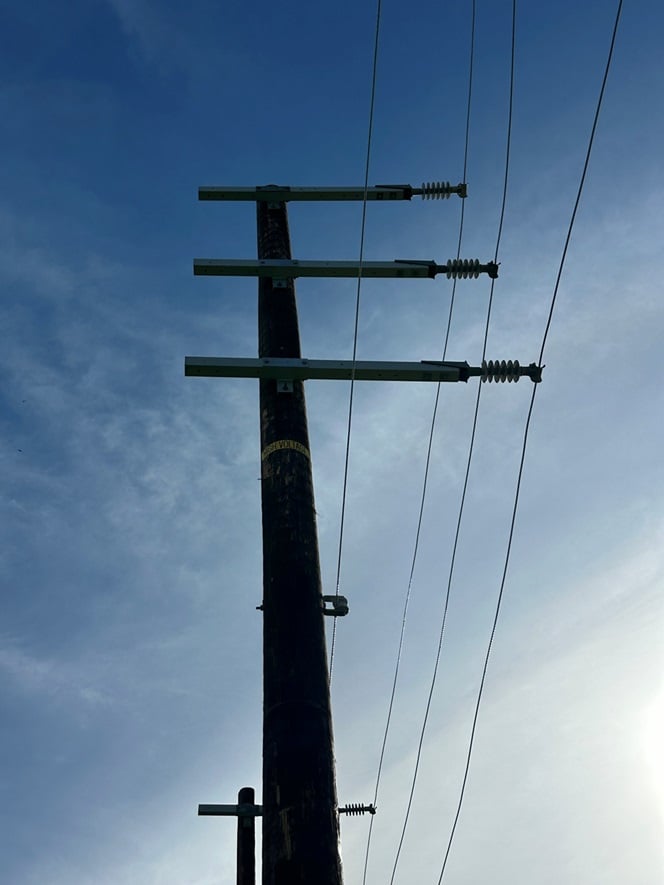
This will be a hot stick event and will involve the replacement of a 34.5KV cross arm. The event will consist of three 3/0 ACSR conductors, single circuit, vertical construction, straight through, on three separate 6ft single fiberglass arms. The circuit will be considered hot and a safe working distance from all conductors must be maintained. The team will remove the conductor from the lowest arm, remove and lower the crossarm to the ground and re-install. Restore the conductor onto the crossarm.
- Rubber gloves will be required from ground to ground.
- Tools and material may be placed in bags during five-minute prep time.
- Journeymen may not do groundwork with tools on.
- Time starts at the judge’s signal.
- Neutral must be covered.
- Hand line may be hung on the arm if a safe working distance is maintained.
- Cover may be installed on the lower phase.
- The conductor must be securely held before loosening the clamp.
- The conductor must have two points of contact when being moved.
- Two points of contact must be maintained until the wire is secured by the groundman.
- Time stops when the last lineman touches the ground and the team calls time.
- All tools and materials must be on the tarp before time is called.
Tools and Materials Provided
- 1 – Hand line
- 1 – Nose bag
- 1 – Hot stick bag
- 2 – Hardcovers
- 2 - Line Hoses
- 2 – Clamp sticks
- 1 – Pig tail link stick w/ tag line
- 1 – Universal stick w/ ratchet & socket
- 1 - Split Blanket w/ 2 Clothes Pins
Journeyman Event - 34.5 kV Dead End Change
Meantime: 8 minutes
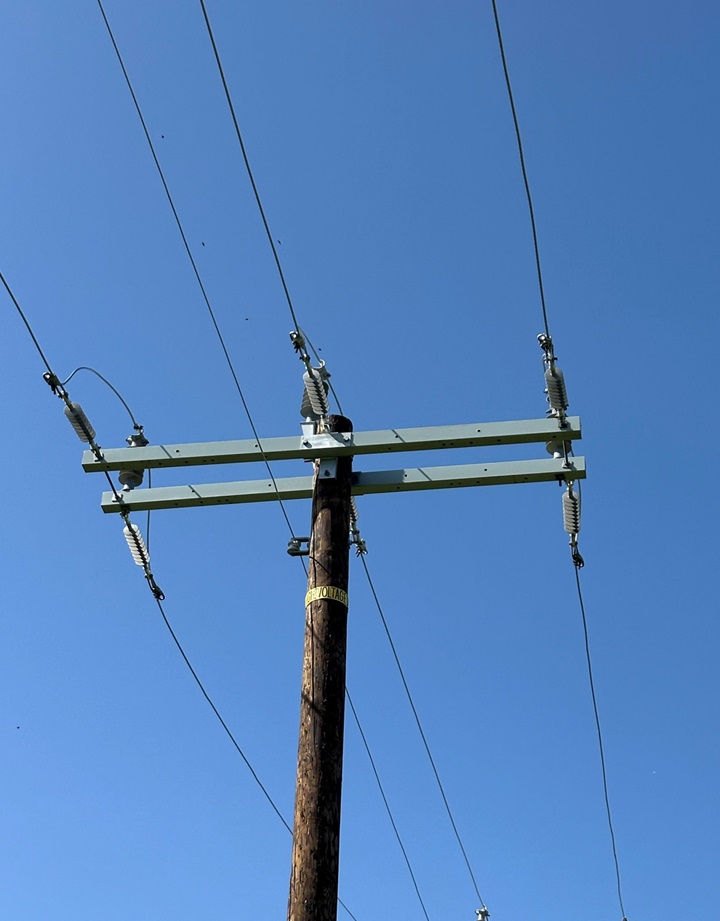
This will consist of three 3/0 ACSR conductors dead-ended back-to-back on a set of 10ft double fiberglass arms, and one dead ended at pole position with over the arm jumpers. The circuit will be considered de-energized with shorts and grounds already applied. The four outside dead-end insulators will need to be replaced.
- Rubber gloves will not be required for this event.
- Tools and material may be placed in bags during five-minute prep time.
- Journeymen may not do groundwork with tools on.
- Time starts at the judge’s signal...
- Neutral wire does not need to be covered for this event.
- Cotter keys must face towards the pole.
- Time stops when the last lineman touches the ground and the team calls time.
- All tools and materials must be on the tarp before time is called.
Tools and Materials Provided
- 1 – Hand line
- 1 – Nose bag
- 2 – Arm grommets (1" web sling)
- 4 – Poly dead-end insulators
- 2 – KLEIN Wire grips
- 2 – Hot Hoist
Journeyman Event - 4.8 kV Switch Change
Meantime: 9 minutes
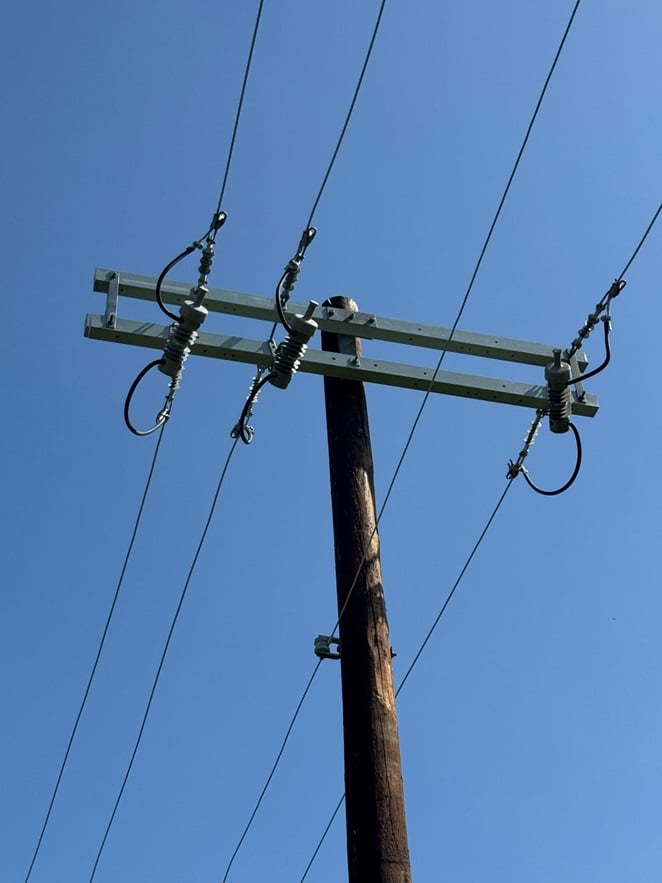
This will be a simulated 4.8KV rubber glove event. The object is to replace one Positect 300amp switch of a 3-phase s-section, while maintaining continuity of service by using a mechanical jumper. The conductors will be dead ended back-to-back in a balance configuration with A and B positions on one side of the pole, and C position on the other. The switches will be located on a 10ft switch arm 15 ½" below the conductors. ‘B’ position switch will be replaced.
- Rubber gloves will be required from ground to ground.
- Tools and material may be placed in bags during five-minute prep time.
- Journeymen may not do groundwork with tools on.
- Time starts at the judge’s signal.
- Linemen will ascend the pole and must cover the neutral conductor.
- Linemen may not belt above neutral until it is covered.
- A- Position switch must be covered prior to working on B-Position switch.
- The mechanical jumper may not lay on the arm.
- Switch must be opened prior to removing and installing connections.
- Wire must be cleaned prior to installing jumper or new leads.
- Connections must be "backed up" while installing or removing.
- Switch leads must be replaced.
- Time stops when the last lineman touches the ground and the team calls time.
- All tools and materials must be on the tarp before time is called.
Tools and Materials Provided
- 4 – Guts
- 2 – Blankets w/4 Clothes Pins
- 1 – Cut out cover w/2 Clothes Pins
- 1 – Gut bag
- 1 – Nosebag
- 1 – Handline
- 1 – Mechanical Jumper
- 2 - Switch Leads
- 1 - Wire brush
- 1 - Short gut
- 1 – Split Blanket w/ 2 Clothes Pins
Journeyman Event - Hurtman Rescue
Drop Dead Time: 4 minutes (Per Climber)
- Time starts at the judge’s signal with the journeyman an arm’s length from the pole.
- The journeyman’s tools must be at least an arm’s length from the pole.
- Climbers must be belted before ascending the pole.
- Rubber gloves must be inside the glove bag, fingers up with the flap able to be snapped.
- Looking at the pole from the cross-arm side, the hand line will be hung on the right side of the arm. The dummy will be positioned on the cross-arm side of the pole with safety attached in the "V" brace. A minimum of one complete wrap of the rescue line must be around the crossarm prior to lowering the dummy.
- The dummy shall be secured under the arms with three half hitches tied in front of chest. The "eye splice" in the line must not be tied within the three half hitches.
- "Headache" or "in the hole" must be called out prior to dropping the sheave. The sheave must land within the marked circle.
- Failure to cut any part of the belt other than the marked insert will be a 10-point deduction.
- Dummy may contact pole after safety is first cut. Once the dummy’s descent begins there is no contact allowed.
- The dummy shall be moved in a smooth controlled descent without contacting the pole.
- The dummy’s initial contact with the ground must be within the marked circle.
- Judges will use a 3" PVC conduit between the rope and the dummy’s chest to evaluate the knot.
- Time is over when the dummy is on the ground and the judge determines that there is slack in the line.
- All point deductions will be totaled and subtracted from the 100 points possible for a final team score.
- Both team members’ times will be combined for a total team time.
- Contestants must hang the dummy for the next team.
- Velcro pads must be fully secured prior to climbing.
- Knives must be folded, sheathed or in a pouch. No exposed blades.
Journeyman Event - Pole Climb
- This will be a 2-climber timed team event.
- Any deductions will be added together and deducted from the 100 points available for a final team score.
- Work gloves with a gauntlet must be worn.
- The nosebags provided shall be used to carry the egg via the climber’s mouth.
- No padding is allowed in the bag.
- No climber will be allowed to start with their safety strap around the pole or in their hand and safety straps shall be used via the manufacturer’s recommendations.
- The safety straps being used shall be adjusted prior to any work being performed at the top of the pole and adjusted accordingly per the manufacturer’s recommendations.
- Time starts at the judge’s signal with climber 1 an arm’s length from the pole.
- The first climber will carry the egg up the pole in the nosebag provided, discard the existing nosebag hanging at the top and yell out "headache" or "in the hole". The discarded nosebag must fall within the circle directly below the pole.
- Climber 1 is to place the egg in their mouth, hang the new nosebag and climb down under control.
- Once climber 1 is on the ground, unbelted and clear of the pole climber 2 will then belt off, ascend the pole, and repeat the same process as climber 1.
- Time will stop and be recorded after the second climber’s first foot hits the ground. This will be the team’s time for the event.
- Both eggs will be inspected at this time.
- Any damage to each egg is a 10-point deduction per egg.
- No skip stepping, hot dogging or free falling is allowed. (See climbing infractions for definition).
- If the egg falls at any time the team is encouraged to continue the event to receive a final team score.
- Gaff guards shall be installed on gaffs outside of the circle area directly below the event poles.
Apprentice Quiz
Meantime: 10 minutes
All apprentice competitors must report to the designated test area immediately following the opening ceremonies and the singing of the National Anthem for the "Apprentice quiz." The test will consist of 20 questions. Questions will be geared towards basic knowledge and fundamental skills of the power transmission and distribution trade.
The test will be conducted with electronic response cards to record and time your answers. Each question will be worth 2 points, 60 points will be added to your final quiz results so that the quiz has the same 100-point total as the other apprentice events. Apprentices will be timed and in the case of a tie the time will determine the winner. The quiz will be administered to all of the participants at the same time, so it is imperative that the competitors check in with the head judge for this event promptly. Failure to report for the quiz on time, talking during the quiz, or disturbing other apprentices during the quiz will result in a 10-point deduction.
Apprentice Event - Insulator Change
Meantime: 8 minutes
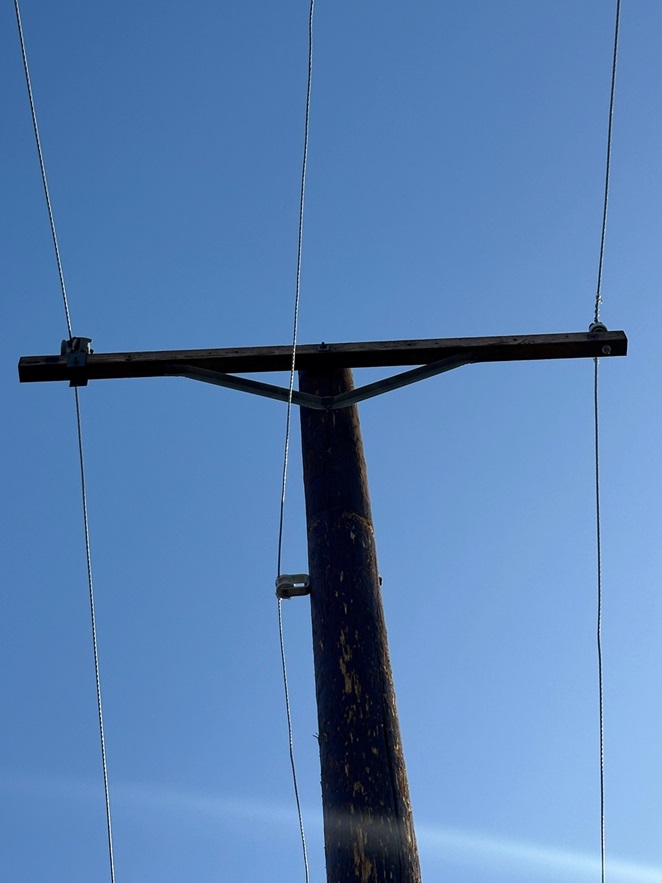
The 12-foot crossarm has one pin and insulator in the "C" position with a 3/0 ACSR conductor tied in. On the opposite side, a second 3/0 ACSR conductor is set in a stringing roller. The apprentice will ascend to the top of the pole, secure the handline to the crossarm, and raise any required materials. The apprentice will then install a new pin and insulator in "C" position, transfer the conductor from the roller onto the new insulator, properly tie in the conductor, and remove the roller. On the opposite side of the crossarm, the apprentice will install a new roller, transfer the conductor from the insulator into the roller, and remove the existing pin and insulator.
- The apprentice can layout material and tools during the five minute prep-time.
- Tie wire and roller may be placed in nose bag prior to the start of the event.
- Apprentices may not do groundwork with tools on.
- Time starts at the judge’s signal.
- Roller must be installed so it opens outward towards the P&I.
- Conductors must be tied-in using the standard aluminum tie method (example provided).
- All material must be sent up or down in the nose bag using the hand line.
- Time stops when the apprentice reaches the ground and calls time.
Tools and Materials Provided
- 1 – Hand line w/Bashlin hook
- 1 – Nose bag
- 1 – P&I
- 1 – Stringing roller
- 1 – AL Tie wire
Apprentice Event - Obstacle Course
Meantime: 9 minutes
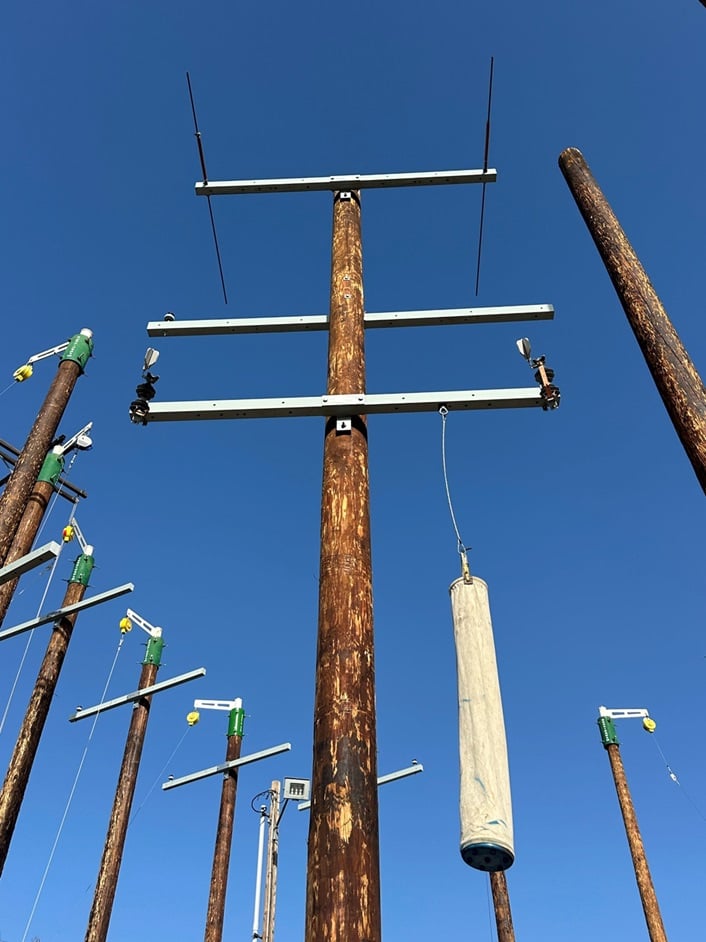
The apprentice will extend the telescoping switch stick and open the switch located on the lower arm. After opening the switch, the apprentice will retract the telescoping switch stick to its normal length and place it in the holder. The apprentice will then put on their climbing tools, ascend the pole to the first arm (10-foot fiberglass), and use the provided switch stick to move the switch door from one side of the arm to the other. After completing this task, the apprentice will climb over the arm, rotate to the opposite side of the pole, and proceed to the next arm. At the second arm (12-foot fiberglass), the apprentice will remove the pin and insulator from the C position on one side of the pole and install it in the C position on the opposite side. The apprentice will then climb over the arm, rotate to the other side of the pole, and continue to the top arm. At the final arm (10-foot fiberglass), the apprentice will remove the KVS from the C position on one side of the pole and install it on the C position on the opposite side. After completing all tasks, the apprentice will descend the pole, remove their climbing tools, and close the switch on the bottom arm. Time will stop once the apprentice retracts the telescope switch stick to its normal length, place’s it in the holder, and calls time.
- Apprentices may not do groundwork with tools on.
- Time starts at the judge’s signal.
- Apprentices must be belted prior to ascending pole and must be belted at all times.
-
There is a 3-minute drop dead time on opening the switch with the telescoping stick. There will be a 2-point deduction if you exceed the 3 minutes.
NOTE: if you choose to bypass the attempt to open the switch there will be a 10-point deduction.
- The switch must be opened and closed with the sticks provided.
Tools and Materials Provided
- 1 – Telescoping stick
- 1 – Switch stick in a bag
Apprentice Event - Hurtman Rescue
Drop Dead Time: 6 minutes
- Time starts at the judge’s signal with the apprentice an arm’s length from the pole.
- The apprentice’s tools must be at least an arm’s length from the pole.
- The apprentice must be belted before ascending the pole.
- Rubber gloves must be inside the glove bag, fingers up with the flap able to be snapped.
- Looking at the pole from the cross-arm side, the hand line will be hung on the right side of the arm. The dummy will be positioned on the cross-arm side of the pole with safety attached in the "V" brace. A minimum of one complete wrap of the rescue line must be around the cross arm prior to lowering the dummy.
- The dummy shall be secured under the arms with three half hitches tied in front of chest. The "eye splice" in the line must not be tied within the three half hitches.
- "Headache" or "in the hole" must be called out prior to dropping the sheave. The sheave must land within the marked circle.
- Failure to cut any part of the belt other than the marked insert will be a 10-point deduction.
- Dummy may contact pole after safety is first cut. Once the dummy’s descent begins there is no contact allowed.
- The dummy shall be moved in a smooth controlled descent without contacting the pole.
- The dummy’s initial contact with the ground must be within the marked circle.
- Judges will use a 3" PVC conduit between the rope and the dummy’s chest to evaluate the knot.
- Time is over when the dummy is on the ground and the judge determines that there is slack in the line.
- All point deductions will be totaled and subtracted from the 100 points possible for a final score.
- The apprentice must hang the dummy for the next team.
- Velcro pads must be fully secured prior to climbing.
- Knives must be folded, sheathed or in a pouch. No exposed blades.
Apprentice Event - Pole Climb
- Work gloves with a gauntlet must be worn.
- The nosebag provided shall be used to carry the egg via the climber’s mouth.
- No padding is allowed in the bag.
- The climber will not be allowed to start with their safety strap around the pole or in their hand and safety straps shall be used via the manufacturer’s recommendations.
- The safety straps being used shall be adjusted prior to any work being performed at the top of the pole and adjusted accordingly per the manufacturer’s recommendations.
- Time starts at the judge’s signal with the climber an arm’s length from the pole.
- The climber will carry the egg up the pole in the nosebag provided, discard the existing nosebag hanging at the top and yell out "headache" or "in the hole". The discarded nosebag must fall within the circle directly below the pole.
- The climber is to place the egg in their mouth, hang the new nosebag and climb down under control.
- Time will stop and be recorded after the climber’s first foot hits the ground.
- Both eggs will be inspected at this time.
- Any damage to each egg is a 10-point deduction.
- No skip stepping, hot dogging or free falling is allowed. (See climbing infractions for definition).
- If the egg falls at any time the climber is encouraged to continue the event to receive a final score.
- Gaff guards shall be installed on gaffs outside of the circle area directly below the event poles.